

By Agathe
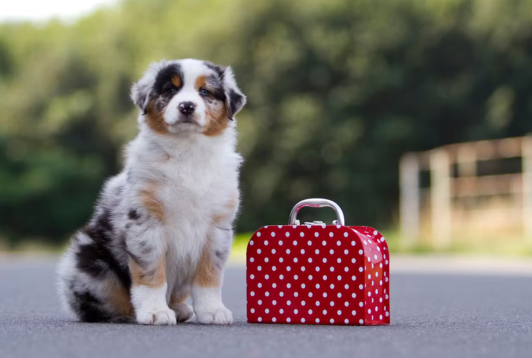
The idea likely came to you one evening, watching your dog fall asleep at the foot of the sofa. What if, this time, they came with you? The good news is: travelling with your dog is absolutely possible, as long as you prepare properly. Here is everything you need to know, from the first thought to your arrival at your destination.
Before booking anything, take a moment to honestly assess your companion’s personality. Not all dogs experience travel in the same way and it’s not about breed or size, but temperament. An anxious dog, one that is not well socialised, highly sensitive to stimulation, or prone to separation anxiety, may experience travel as stressful rather than enriching.On the other hand, a curious, adaptable dog that is used to new environments will often make an ideal travel companion.
Ask yourself a few key questions:
If you have any doubts, consult your veterinarian or a positive reinforcement behaviour specialist before taking the next step. Preparing your dog emotionally in advance is always preferable to managing a difficult experience on arrival , for both of you.
Regardless of your destination or mode of transport, a veterinary check-up before departure is essential. It ensures your dog is fit to travel and allows you to anticipate any specific needs during the journey.
Pet Cheri can also accompany your pet to veterinary appointments if needed !
Your dog must be fully up to date with vaccinations: rabies, leptospirosis, parvovirus, kennel cough, depending on your destination. For travel within Europe, a European pet passport is mandatory. Issued by your veterinarian, this official document includes your dog’s identification details, microchip information, and vaccination history.
Ticks, fleas, mosquitoes, leishmaniasis… parasite-related risks vary significantly depending on the region. Travelling to the South of France, Spain, Portugal, or Italy may expose your dog to parasites that are far less common in cooler climates. Consult your veterinarian at least three to four weeks before departure to establish an appropriate prevention plan.
If your dog struggles with car travel; excessive drooling, vomiting, restlessness, there are solutions. Your veterinarian may prescribe motion sickness medication.
Natural supplements, such as ginger-based or calming plant formulas, can also help in milder cases. Ideally, test these solutions in advance, starting with short journeys and gradually increasing duration.
Nothing is more stressful than being stopped at border control with incomplete paperwork. Here’s what you should prepare in advance.
(This is required for entering most EU countries and essential for returning to France from certain destinations.)
Requirements vary depending on the destination. Some countries require rabies antibody blood tests carried out in approved laboratories, often with long waiting periods (from several weeks to several months).
Make sure to check with the embassy of your destination country or your veterinarian well in advance, ideally three to six months before departure.
Pet Cheri offers administrative assistance to ensure stress-free travel.
Feel free to submit your request here:
👉 https://www.petcheri-app.com/customer/signin
In our next article, we will share our recommendations on regulations, safety, and essential tips for transporting your dog smoothly, depending on each mode of travel.
📞 06 16 65 26 01
📩 concierge@petcheri.com
Free initial consultation · Response within 24h !
Exclusive tips from experts to pamper your furry friend


.svg)